Dress shape names describe the outline a dress creates when worn. Common shapes include A-line, sheath, shift, fit-and-flare, empire waist, bodycon, mermaid, and ball gown.
Each shape has a different fit, waistline, and skirt design. Once you know these names, it becomes easier to identify dress styles, compare outfits, and choose the right silhouette for different occasions.
What Are Dress Shape Names?
Dress shape names are terms used to describe how a dress fits and falls on the body. In fashion, this overall outline is called a silhouette. Some dresses follow the body’s natural lines, while others create a loose, straight, or fuller shape.
For example, an A-line dress widens gradually toward the hem. In contrast, a sheath dress follows the body’s shape more closely. Meanwhile, a ball gown has a fitted upper section and a very full skirt.
It is also helpful to know that shape, length, neckline, and occasion are different features. A dress can have an A-line shape, a V-neckline, and a midi length at the same time. Therefore, understanding these terms gives you a clearer picture of the dress you want.
Common Dress Shape Names and Their Meanings
The easiest way to learn dress silhouettes is to compare their outlines. The table below covers several common shapes and explains how to recognize each one.
| Dress Shape | What It Looks Like | Common Uses |
| A-line | Fitted at the top and gradually wider toward the hem | Casual wear, parties, weddings |
| Sheath | Follows the body in a slim, straight line | Workwear, dinners, formal events |
| Shift | Falls loosely from the shoulders with little waist shaping | Everyday wear, office outfits |
| Fit-and-flare | Fitted upper section with a skirt that flares from the waist | Parties, dates, weddings |
| Empire waist | Waistline sits just below the bust | Summer dresses, formal gowns |
| Bodycon | Closely follows the body’s contours | Parties, evening wear |
| Wrap | One side crosses over the other and usually ties at the waist | Casual wear, work, dinners |
| Slip | Simple, fluid shape inspired by a slip garment | Layering, evening wear |
| Mermaid | Fitted through the body, then flares near the knees or lower | Formal gowns, weddings |
| Trumpet | Fitted through the body with a flare beginning around the mid-thigh | Evening gowns, formal events |
| Ball gown | Fitted bodice with a very full skirt | Balls, formal occasions, bridal wear |
| Column | Falls in a long, narrow line with little skirt flare | Formal events, evening wear |
| Drop waist | Waist seam sits below the natural waist, closer to the hips | Vintage-inspired dresses, party wear |
| Smock | Loose, relaxed shape, often with gathered fabric | Casual wear, summer outfits |
| Tiered | Made with horizontal fabric sections that add volume | Casual dresses, summer wear |
However, these categories can overlap. For instance, a wrap dress may have an A-line skirt, while a slip dress may have a column silhouette. The name usually describes the most noticeable feature of the design.
A-Line Dress Shape
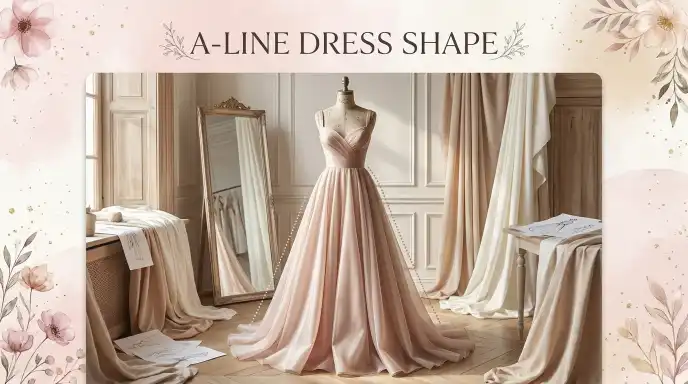
An A-line dress is fitted or shaped through the upper body and gradually widens toward the hem. Its outline resembles the letter A. As a result, it offers a balanced shape without requiring a very full skirt.
This silhouette comes in many lengths and fabrics. A short cotton A-line dress works well for casual outings, while a long satin version can suit a formal event.
How to recognize it:
- The upper section is more fitted than the skirt.
- The skirt widens gradually rather than flaring suddenly.
- The overall outline looks like a capital A.
Choose this shape if you want a versatile dress with gentle movement. In addition, it is easy to find in casual, office, party, and formal designs.
Sheath Dress Shape
A sheath dress has a slim, tailored outline that follows the body’s natural shape. It usually has shaping through the bust, waist, and hips, but it does not create a dramatic flare at the bottom.
This shape is common in office clothing and polished evening outfits. For example, a knee-length sheath dress can create a neat professional look. Meanwhile, a version in satin or textured fabric may work for a dinner or formal gathering.
How to recognize it:
- The dress follows the body closely.
- The skirt remains relatively narrow.
- Seams or darts often provide its fitted shape.
Although a sheath dress is fitted, it does not always have to be tight. Fabric, tailoring, and ease determine how closely it sits against the body.
Shift Dress Shape
A shift dress hangs relatively straight from the shoulders and offers more room around the waist. Unlike a sheath dress, it does not rely on strong waist shaping to create its outline.
Because of its relaxed cut, a shift dress is a practical option for everyday outfits and simple workwear. It can also feature sleeves, pockets, prints, or decorative details.
How to recognize it:
- The dress falls in a fairly straight line.
- The waist is not strongly defined.
- The fabric has room to move around the body.
A shift dress may look similar to a sheath dress at first glance. However, the shift is usually less shaped through the waist and hips.
Fit-and-Flare Dress Shape
A fit-and-flare dress has a fitted bodice and a skirt that opens out from the waist. The contrast between the upper and lower sections gives it a clear, lively silhouette.
This shape is popular for parties, weddings, and other occasions where movement matters. It also appears in everyday dresses made from cotton, jersey, and other flexible fabrics.
How to recognize it:
- The bodice fits more closely than the skirt.
- The waist is clearly defined.
- The skirt flares outward below the waist.
Unlike an A-line dress, which often widens gradually, a fit-and-flare design may have a more noticeable difference between the fitted waist and fuller skirt.
Empire Waist Dress Shape
An empire waist dress has a raised waistline that sits just below the bust. From that point, the fabric falls over the stomach and hips. The skirt may flow loosely or have a gentle flare.
This design appears in summer dresses, maternity styles, romantic outfits, and formal gowns. However, the final look depends on the fabric and the shape of the skirt.
How to recognize it:
- The waist seam sits above the natural waist.
- The skirt begins directly below the bust.
- The lower section often falls loosely.
For example, a lightweight empire dress can create a soft, flowing look. A structured fabric, on the other hand, can make the same basic shape feel more formal.
Bodycon Dress Shape
A bodycon dress fits closely to the body and follows its contours from top to bottom. Stretch fabrics are common because they allow the dress to fit snugly while still allowing movement.
This silhouette is often seen in party dresses, evening outfits, and modern casual looks. It may have a mini, midi, or maxi length.
How to recognize it:
- The dress fits closely across the body.
- There is little extra fabric around the waist and hips.
- Stretch materials are often used.
Bodycon describes a close-fitting shape rather than one specific neckline or hem length. Therefore, two bodycon dresses can look quite different even when they share the same silhouette.
Wrap Dress Shape
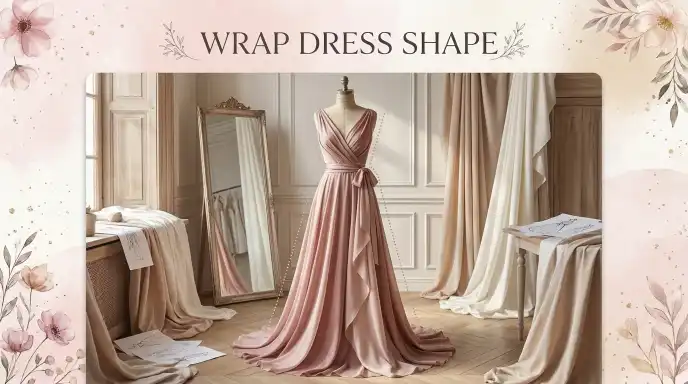
A wrap dress features fabric that crosses over the front of the body. It usually closes with a tie, belt, or fastening at the waist. This design often creates a V-shaped neckline and allows some adjustment around the middle.
Wrap dresses come in many forms. Some have a flowing A-line skirt, while others have a straighter or more fitted lower section.
How to recognize it:
- One front panel crosses over the other.
- A tie or fastening often secures the dress.
- The waist can usually be adjusted to some degree.
A wrap dress is especially useful when you like a defined waist and an adjustable fit. However, the exact fit depends on the fabric, cut, and fastening.
Slip Dress Shape
A slip dress has a simple, lightweight design inspired by a traditional slip. It often features narrow straps, a clean neckline, and fabric that drapes over the body.
Many slip dresses use satin, silk, or similar fluid fabrics. Some are cut on the bias, which helps the fabric fall smoothly along the body. Others have a straighter shape.
How to recognize it:
- The design is usually simple and streamlined.
- Narrow shoulder straps are common.
- The fabric often drapes rather than holding a stiff shape.
For a casual look, you can layer a slip dress over a T-shirt or under a jacket. Alternatively, a satin slip dress can work as evening wear with more formal accessories.
Mermaid Dress Shape
A mermaid dress fits closely through the bodice, waist, and hips before flaring out near the knees or lower. Its outline resembles a mermaid’s tail, which explains the name.
This dramatic silhouette is often used for bridal gowns, evening dresses, and formal events. The flare may be soft or very full, depending on the design.
How to recognize it:
- The dress follows the body’s contours through the hips.
- The skirt remains narrow through much of the upper leg.
- A noticeable flare appears near the knees or below.
Because the skirt can restrict movement, check the slit, hem, and fabric when choosing a mermaid dress. These details can affect how comfortably you walk and sit.
Trumpet Dress Shape
A trumpet dress is fitted through the bodice and hips, then begins to flare around the mid-thigh. Its outline resembles the opening of a trumpet.
It is often used for formal gowns and wedding dresses. The flare usually starts higher than it does on a traditional mermaid dress, creating a different balance between the fitted and full sections.
How to recognize it:
- The upper body and hips are fitted.
- The skirt starts widening around the mid-thigh.
- The lower section creates a clear trumpet-like outline.
The trumpet and mermaid shapes are easy to confuse. The main difference is where the flare begins: a trumpet generally flares higher, while a mermaid often stays fitted closer to the knees.
Ball Gown Dress Shape
A ball gown has a fitted bodice and a very full skirt. The waist usually creates a clear division between the upper and lower parts of the dress.
This shape is common in bridal wear, formal balls, and special-event gowns. The skirt may use layers of tulle, structured fabric, or other materials to create volume.
How to recognize it:
- The bodice is fitted or structured.
- The waist is clearly defined.
- The skirt is much fuller than the upper section.
Unlike an A-line dress, which widens gradually, a ball gown usually has far more skirt volume. Therefore, it creates a more dramatic and traditional formal look.
Column Dress Shape
A column dress falls in a long, narrow line from the upper body to the hem. It usually has little skirt flare, although it may still have some shaping at the waist.
Column dresses are common in evening wear, formal gowns, and minimalist fashion. The shape can look fluid in a soft fabric or more structured in a firm material.
How to recognize it:
- The outline stays narrow from top to bottom.
- The skirt does not flare dramatically.
- The overall shape looks long and straight.
A column dress and a sheath dress may look similar. However, a sheath dress usually has more tailored shaping through the waist and hips, while a column dress emphasizes a long, straight outline.
Drop Waist Dress Shape
A drop waist dress has a waist seam that sits lower than the natural waist, often around the hips. The skirt begins below this seam rather than at the narrowest part of the torso.
This shape is often used in vintage-inspired designs and some modern party dresses. The lower seam can create a longer-looking upper section and a different balance between the bodice and skirt.
How to recognize it:
- The waist seam sits below the natural waist.
- The upper section appears longer.
- The skirt begins around the hip area.
Drop waist dresses can have straight, pleated, or fuller skirts. As a result, the exact silhouette depends on how the lower section is constructed.
Smock Dress Shape
A smock dress has a loose, relaxed outline. It often uses gathered fabric, a roomy body, or a loose fit that creates soft volume rather than a sharply defined waist.
Smock dresses are popular for casual wear, especially in warm weather. Cotton and lightweight fabrics help create an easy, comfortable look.
How to recognize it:
- The dress has a loose fit.
- Gathering or soft volume may appear around the bodice or skirt.
- The waist is often not sharply defined.
Although smock and shift dresses can both look relaxed, they are not the same. A shift dress usually has a straighter outline, while a smock dress often has more gathers or fabric volume.
Tiered Dress Shape
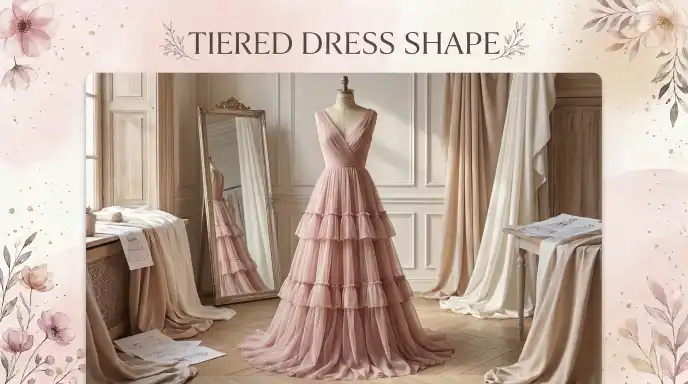
A tiered dress uses horizontal sections of fabric stacked from top to bottom. Each tier may add width or movement, creating a layered skirt.
This design is common in summer dresses, bohemian outfits, and casual maxi dresses. The number of tiers and the amount of gathering can change the overall effect.
How to recognize it:
- Horizontal fabric sections are visible.
- The skirt often gains volume toward the hem.
- Each section may have gathers or seams.
A tiered dress describes how the garment is constructed, so it can also have an A-line or empire-style shape. In other words, tiering is a design feature rather than a completely separate fit category.
How to Tell Similar Dress Shapes Apart
Some dress silhouettes look alike in product photos. However, checking the waistline, fit, and skirt can help you identify them.
| Dress Shapes | Main Difference |
| A-line vs. fit-and-flare | A-line widens gradually; fit-and-flare usually has a more noticeable flare below the waist. |
| Sheath vs. shift | Sheath follows the body’s shape more closely; shift falls straighter with less waist shaping. |
| Mermaid vs. trumpet | Mermaid usually flares near the knees or lower; trumpet generally begins flaring around the mid-thigh. |
| Sheath vs. column | Sheath is more tailored to the body; the column emphasizes a long, narrow outline. |
| Empire vs. drop waist | The empire has a raised waist below the bust; drop waist has a lowered seam near the hips. |
| Bodycon vs. sheath | Bodycon is close-fitting and often stretchy; sheath is shaped through tailoring and may be less tight. |
| Shift vs. smock | Shift usually falls straight; smock often has gathering or added volume. |
When you are unsure, look at three details: where the dress fits most closely, where the skirt starts to widen, and where the waist seam sits. These clues can help you identify the most common silhouettes.
How to Choose a Dress Shape
The right dress shape depends on your comfort, personal style, and the occasion. Rather than following strict fashion rules, think about how you want the dress to fit and move.
- For a classic look: Consider an A-line, sheath, or wrap dress. These shapes work across many settings.
- For a relaxed outfit: Try a shift, smock, or loose slip dress. These designs offer a softer outline.
- For a defined waist: Look at fit-and-flare, wrap, or some sheath styles.
- For a dramatic formal look: Consider a mermaid, trumpet, or ball gown silhouette.
- For a long, simple outline: A column dress may suit your style.
- For a flowing summer outfit: Choose a tiered or empire waist dress.
- For a close fit: Bodycon designs follow the body’s contours.
In addition, consider the fabric. Stiff materials can hold a fuller shape, while soft fabrics often drape and move. Stretch materials may offer more flexibility in fitted designs.
Most importantly, try to judge the dress by how it feels and fits on you. Fashion guidelines can help you narrow your options, but they do not need to limit your choices.
Common Mistakes When Identifying Dress Shapes
Dress names can be confusing, especially when stores use several style terms in one product description. Avoid these common mistakes to make comparisons easier.
- Confusing shape with length. A mini, midi, or maxi dress describes the hem length, not the silhouette.
- Treating every fitted dress as bodycon. Sheath dresses can be fitted without being very tight.
- Mixing up mermaid and trumpet shapes. Check where the skirt begins to flare.
- Assuming every wrap dress has the same skirt. Wrap describes the front construction, not one fixed silhouette.
- Ignoring fabric. The same basic shape can look very different in satin, cotton, jersey, or tulle.
- Relying only on product names. Some retailers use style labels loosely, so examine the actual cut and outline.
Once you separate silhouette, length, fabric, and construction, dress descriptions become much easier to understand.
Frequently Asked Questions About Dress Shape Names
Q1. What are the main dress shape names?
Common dress shape names include A-line, sheath, shift, fit-and-flare, empire waist, bodycon, wrap, slip, mermaid, trumpet, ball gown, and column. Each describes a different outline or fit. Some focus on the overall silhouette, while others describe a specific construction feature.
Q2. What is the most common dress shape?
A-line is one of the most widely recognized dress silhouettes. It has a fitted or shaped upper section and a skirt that gradually widens toward the hem. However, the most common shape can vary by store, season, and type of dress.
Q3. What is the difference between A-line and fit-and-flare dresses?
An A-line dress widens gradually from the upper body toward the hem. A fit-and-flare dress has a more defined waist and a skirt that flares more noticeably below it. Both can look similar, but fit-and-flare styles often have a stronger contrast between the bodice and skirt.
Q4. What is the difference between a sheath and a shift dress?
A sheath dress is shaped to follow the body’s natural contours, especially around the waist and hips. A shift dress falls more loosely in a straight line and usually has less waist shaping. Therefore, sheath styles often look more tailored, while shift styles tend to look more relaxed.
Q5. What is the difference between mermaid and trumpet dresses?
Both silhouettes fit closely through much of the body and then flare out. However, a trumpet dress usually begins flaring around the mid-thigh, while a mermaid dress often stays fitted closer to the knees before widening. The placement of the flare is the main difference.
Q6. Are dress shape names and dress styles the same thing?
Not exactly. A dress shape describes its overall outline, while a dress style may refer to its construction, neckline, fabric, or purpose. For example, a wrap dress can have an A-line shape, and a slip dress can have a column silhouette.
Q7. What dress shape is best for formal occasions?
A ball gown, mermaid, trumpet, column, or sheath dress can work well for formal occasions. The best option depends on the dress code, fabric, and personal preference. For example, a ball gown creates a fuller look, while a column dress offers a simpler, more streamlined outline.
Q8. How can I identify a dress shape from a photo?
First, look at how the dress fits through the bust, waist, and hips. Next, check if the skirt falls straight, widens gradually, or flares sharply. Finally, locate the waist seam if one is visible. These details usually provide enough clues to identify the main silhouette.
Conclusion:
Learning dress shape names makes it easier to understand fashion descriptions and find the look you want. A-line, sheath, shift, fit-and-flare, empire, bodycon, mermaid, and column are useful terms to know because each describes a different way a dress fits or falls.
When comparing dresses, look beyond the name. Check the waistline, skirt shape, fabric, and length as well. With these details in mind, you can choose dresses more confidently and understand how different designs create different looks.

I’m Mia Carter, a language enthusiast and writer passionate about making grammar, words, and everyday communication simple and easy to understand. I enjoy sharing clear, practical insights that help readers communicate with confidence.