Native American names for girls come from many Indigenous nations, languages, and cultural traditions across North America. Some names have meanings linked to nature, animals, family, or birth order.
Others are connected to historical people, places, or modern naming practices. Winona, Kimimela, and Zitkala are examples associated with Dakota or Lakota language traditions.
However, not every name marketed as Native American online has a verified origin or meaning. This guide separates documented meanings from uncertain claims to help you choose a name with care.
Beautiful Native American Girl Names and Meanings
Some Indigenous names have clear meanings in a particular language. Others became familiar as English given names through literature, public figures, or place names. Knowing the difference helps you make a more informed choice.
- Winona : Associated with the Dakota word for firstborn daughter. It is also used as a feminine given name in English.
- Kimimela : A Lakota name meaning butterfly.
- Zitkala : A name derived from the Lakota word for bird.
- Tallulah : A feminine name linked to the Tallulah place name in Georgia. Its often-repeated meaning of “leaping water” is disputed; another proposed origin connects it with a Creek word meaning “town.”
- Dakota : A name derived from the name of a Native American people and language. It is also used as a modern given name.
- Cheyenne : A given name taken from the name of the Cheyenne people. It should not be treated as a simple English word with one certain literal meaning.
- Sequoia : A nature-inspired name associated with the giant trees of North America. The tree name is linked to Sequoyah, the Cherokee scholar who developed the Cherokee syllabary.
- Kaya : A modern given name also familiar from a fictional Nez Perce character in the American Girl series. That association alone does not establish a traditional Nez Perce meaning for the name.
Meanings and cultural associations are not interchangeable. For example, a name can be inspired by a Native American place or person without originating as a traditional girl’s name.
Native American Girl Names Inspired by Nature
Nature plays an important role in many naming traditions around the world. Animals, plants, water, and the natural world can also appear in Indigenous languages and personal names. Still, the meaning of a word depends on its specific language and context.
Names Associated With Animals
Kimimela is a documented Lakota name meaning butterfly. It offers a nature-based option with a clear linguistic association.
Zitkala comes from a Lakota word meaning bird. It also has a connection to Zitkala-Ša, the Yankton Dakota writer, educator, and activist known for her work on Indigenous rights and culture.
Animal-related names can suggest freedom, movement, or a connection with the natural world. However, these associations are personal interpretations rather than fixed cultural meanings. When considering an animal word from an Indigenous language, check if the word is actually used as a personal name.
Names Associated With Water and Places
Tallulah is often presented online as meaning “leaping water.” However, that interpretation is uncertain. The name is associated with Tallulah Falls in Georgia, and its linguistic origin has been debated.
Sequoia has a different kind of nature connection. It is the name of a tree genus, while the word itself is linked to Sequoyah, a Cherokee scholar who created the Cherokee syllabary. Therefore, it is more accurate to describe Sequoia as a nature-inspired name with a historical Cherokee association than to assign it an invented Cherokee meaning.
These examples show why it is useful to separate a name’s history from the symbolism people attach to it today.
Dakota and Lakota Names for Girls
Dakota and Lakota are related languages within the Siouan language family. Their words and naming practices should not be treated as identical in every detail.
The following names have documented linguistic connections.
- Winona : Associated with the Dakota word for firstborn daughter.
- Kimimela : A Lakota name meaning butterfly.
- Zitkala : Derived from a Lakota word meaning bird.
These names offer different kinds of meaning. Winona relates to birth order, while Kimimela and Zitkala are connected to animals.
It is also important to understand that a word with a clear translation is not automatically a traditional personal name. Some Indigenous words have particular cultural uses, and a community may have its own expectations about who can receive a name and how it is given.
For this reason, families seeking a name within a specific Dakota or Lakota tradition should consult knowledgeable speakers or cultural resources from that community.
Native American Girl Names With Historical Connections
Some names become widely known because of people who played important roles in history. Their stories can add context, but a historical connection does not always tell us the original meaning of a name.
Zitkala-Ša
Zitkala-Ša was the name used by a Yankton Dakota writer, educator, musician, and activist. She wrote about Indigenous identity, education, and the treatment of Native American children. The name is associated with the Lakota word for bird.
Her life gives the name a meaningful historical connection beyond its translation. Readers interested in the name can also learn about her writing and advocacy.
Sequoyah and Sequoia
Sequoyah was a Cherokee scholar who developed a writing system for the Cherokee language. The tree name Sequoia is associated with his name, although the precise naming history has been discussed by historians.
Sequoia is now used as a given name in English. Its appeal often comes from the giant trees and the natural imagery they suggest. However, it should not be described as a Cherokee word meaning “tree” without evidence.
Winona
Winona has a documented connection to Dakota birth-order terminology. Historical accounts describe names assigned according to a child’s position in the family. Over time, Winona also became an English given name.
This distinction matters because a name can move between languages and cultures. Its use today may differ from its original linguistic or social function.
Unique Native American Girl Names
Parents often look for a name that feels distinctive without being difficult to pronounce. Names with a documented language connection can be a starting point, but uniqueness should not be the only factor in choosing one.
- Kimimela : A distinctive name with a Lakota butterfly meaning.
- Zitkala : A name with a Lakota bird association and a notable historical connection.
- Winona : A familiar feminine name with a Dakota linguistic background.
- Tallulah : A lyrical name associated with a place name in Georgia, although its proposed Indigenous-language meaning is uncertain.
- Sequoia : A nature-inspired given name linked to the name of Cherokee scholar Sequoyah.
- Dakota : A contemporary given name derived from the name of a Native American people.
- Cheyenne : A given name based on the name of the Cheyenne people.
These names vary in origin and cultural context. Some are connected to Indigenous language words, while others are place-based or derived from the names of peoples. They should not all be presented as traditional Indigenous personal names.
If you want a name from a specific nation, narrow your research to that community rather than relying on a broad list of names labeled “Native American.”
Short Native American Girl Names
Short names can be appealing because they are easy to say and spell. However, a short name is not necessarily easier to translate or verify.
Kaya is a short name used in contemporary English naming and is also familiar through a fictional Nez Perce character. Its use in fiction should not be mistaken for proof of a traditional Nez Perce meaning.
Dakota is longer than Kaya but remains easy for many English speakers to recognize. It comes from the name of a Native American people and language and is used as a modern given name.
Winona is also relatively easy to pronounce in English. Its documented Dakota association gives it a more specific linguistic connection than many names that appear on general baby-name lists.
When comparing short names, look at more than length. Check the pronunciation, spelling, language, and history before deciding which name fits your needs.
How to Choose a Native American Name for a Girl
Choosing a name connected to an Indigenous culture requires more care than selecting a name based only on how it sounds. These steps can help you make a thoughtful decision.
- Identify the nation or language: Native American communities have distinct languages and histories. Start with a specific nation whenever possible.
- Verify the meaning: Look for a tribal language resource, an established dictionary, or a source connected to the relevant community.
- Check if it is a personal name: A translated word may not be used as a traditional given name.
- Learn the pronunciation: Diacritics and unfamiliar sounds can affect a name’s pronunciation and meaning.
- Understand the cultural context: Some names may be linked to family, ceremonies, spiritual beliefs, or community practices.
- Avoid unsupported claims: If reliable sources disagree, explain the uncertainty rather than choosing the most appealing meaning.
- Consider cultural respect: If you are not part of the community, learn if the name is appropriate for your intended use.
For example, the Cherokee Nation Language Department maintains an English-Cherokee word list. However, the department states that it does not provide translations or give Cherokee names for children and family members. This is a useful reminder that translating a word and choosing a culturally appropriate personal name are different tasks.
Common Myths About Native American Girl Names
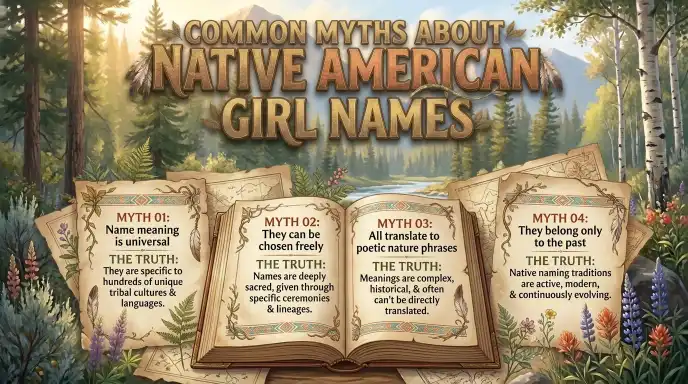
Online name lists often repeat the same meanings without showing where they came from. As a result, names may be assigned to the wrong language or given a meaning that cannot be verified.
Myth: All Native American names come from one language.
There is no single Native American language. Indigenous communities have distinct languages, histories, and naming practices. A word from one language should not be assigned to another nation without evidence.
Myth: Every nature word is a traditional personal name.
A word for a bird, flower, or river may be meaningful, but that does not prove it has been used as a personal name. The cultural role of a word matters as much as its dictionary meaning.
Myth: A popular online meaning must be correct.
Several websites may repeat the same claim without providing a reliable source. Tallulah, for example, is often said to mean “leaping water” in Choctaw, but this explanation is disputed.
Myth: A name associated with an Indigenous person must be Indigenous in origin.
A name can be connected to a historical figure, a place, or a fictional character without originating as a traditional personal name. Sequoia’s connection to Sequoyah is a good example of why these distinctions matter.
A little extra research can help prevent errors and show respect for the people whose languages and histories are being discussed.
Frequently Asked Questions
Q1. What are some Native American names for girls?
Examples include Winona, Kimimela, and Zitkala, which have documented connections to Dakota or Lakota language traditions. Other names, such as Dakota, Cheyenne, Tallulah, and Sequoia, have different cultural, historical, or place-name associations.
Q2. What does Winona mean?
Winona is associated with the Dakota word for firstborn daughter. The name later became established as a feminine given name in English.
Q3. What does Kimimela mean?
Kimimela is a Lakota name meaning butterfly. It is an example of a name with a specific linguistic meaning.
Q4. What does Zitkala mean?
Zitkala comes from a Lakota word meaning bird. The name is also associated with Zitkala-Ša, a Yankton Dakota writer and activist.
Q5. Does Tallulah mean “leaping water”?
The meaning is uncertain. Tallulah is linked to a place name in Georgia, and “leaping water” is a popular interpretation. However, another explanation connects the name with a Creek word meaning “town.”
Q6. Are Dakota and Cheyenne Native American girl names?
Dakota and Cheyenne are names of Native American peoples and are also used as modern given names. However, this does not automatically make every modern use a traditional personal name within those communities.
Q7. How can I verify a Native American name’s meaning?
Start with a language resource or dictionary connected to the specific nation. Tribal language departments and Indigenous cultural institutions are useful sources. Also, check if the word is used as a personal name.
Q8. Is it respectful to choose a Native American name if I am not Native American?
It depends on the name, its cultural context, and the community’s expectations. Learn about the name’s history before choosing it. When possible, seek guidance from a knowledgeable source within the relevant community.
Conclusion:
Native American names for girls reflect many different languages, histories, and cultural traditions. Names such as Winona, Kimimela, and Zitkala have specific connections to Dakota or Lakota language traditions, while Tallulah, Dakota, Cheyenne, and Sequoia have different kinds of historical or cultural associations.
The best choice is not simply the name with the prettiest meaning. Instead, look for reliable evidence, understand the name’s background, and respect the community connected to it. Careful research helps you choose a name with a meaningful story without repeating inaccurate claims.

I’m Mia Carter, a language enthusiast and writer passionate about making grammar, words, and everyday communication simple and easy to understand. I enjoy sharing clear, practical insights that help readers communicate with confidence.