Explore types of dresses names and discover popular dress styles, including A-line, maxi, midi, bodycon, and elegant formal gowns for every occasion. The most popular types of dresses include A-line dresses, maxi dresses, midi dresses, bodycon dresses, wrap dresses, shirt dresses, and fit-and-flare dresses.
Each style has a different shape, length, and overall look. Some dresses suit formal events, while others work best for everyday wear, parties, weddings, or summer outings.
Knowing the names of different dress styles makes shopping easier and helps you describe the look you want. If you prefer elegant eveningwear, casual outfits, or trendy party dresses, this guide explains popular dress names, their features, and when to wear them.
What Are the Main Types of Dresses?
Dress styles are often identified by their silhouette, length, neckline, sleeves, and fabric. For example, an A-line dress gradually widens from the waist, whereas a bodycon dress follows the body’s shape. Similarly, a maxi dress reaches toward the ankles, while a mini dress has a shorter hemline.
Here are some of the most recognizable dress types:
- A-Line Dress: Fitted around the upper body and gradually wider toward the hem.
- Maxi Dress: A long dress that usually reaches the ankles or floor.
- Midi Dress: A dress with a hemline between the knee and ankle.
- Mini Dress: A short dress with a hemline above the knee.
- Bodycon Dress: A close-fitting style that follows the body’s shape.
- Wrap Dress: A dress that crosses over the front and fastens at the waist.
- Shirt Dress: A dress inspired by a traditional button-up shirt.
- Fit-and-Flare Dress: A fitted upper section with a skirt that flares outward.
- Slip Dress: A lightweight dress inspired by lingerie styling.
- Shift Dress: A relatively straight-cut dress that hangs loosely from the shoulders.
These basic styles provide a useful starting point. However, many dresses combine several features, such as a long-sleeved maxi dress or a short-sleeved A-line dress.
Different Types of Dresses by Style
Dress silhouettes influence the overall appearance of an outfit. Therefore, understanding each style can help you choose clothing that suits your taste and the occasion.
A-Line Dress
An A-line dress has a fitted upper section and a skirt that gradually widens toward the bottom. Its shape resembles the letter A, which makes the style easy to recognize.
This design appears in casual dresses, office outfits, partywear, and formal clothing. Moreover, A-line dresses come in different lengths and fabrics, so you can find versions for many occasions.
Fit-and-Flare Dress
A fit-and-flare dress fits around the bodice or waist before opening into a fuller skirt. Unlike a simple straight-cut dress, it creates a noticeable contrast between the upper and lower sections.
Choose this style for daytime events, parties, dinners, or semi-formal occasions. In addition, it works with different sleeve styles and necklines.
Bodycon Dress
A bodycon dress is designed to fit closely to the body. Stretch fabrics are common because they allow the dress to follow the body’s contours.
This style is popular for parties, evening outings, and modern eventwear. For a more relaxed appearance, pair it with a jacket or an oversized layer.
Shift Dress
A shift dress usually has a straight shape that falls from the shoulders without closely defining the waist. Its simple silhouette makes it a practical choice for casual and professional outfits.
For example, a knee-length shift dress can work well for the office. Meanwhile, a printed version can create an easy daytime look.
Wrap Dress
A wrap dress has front panels that cross over one another and fasten with a tie, belt, or closure. This design allows some adjustment around the waist.
Wrap dresses are available in casual cotton, printed fabrics, and more formal materials. As a result, they can suit everyday wear, dinners, and social events.
Sheath Dress
A sheath dress follows the body’s natural outline and usually has a relatively narrow, straight silhouette. It often appears in professional wardrobes and formal collections.
For office settings, choose a simple fabric and a comfortable length. Alternatively, a dress with decorative details can work for an evening event.
Empire-Waist Dress
An empire-waist dress has a waistline positioned above the natural waist, usually just below the bust. The fabric then falls into a longer skirt.
This style appears in romantic dresses, formal gowns, and flowing summer outfits. Furthermore, it can create a long, continuous line from the upper body to the hem.
Peplum Dress
A peplum dress features a short, flared piece of fabric attached around the waist or hips. This detail adds structure and creates a distinctive outline.
Peplum styles are often seen in office clothing, cocktail dresses, and polished occasionwear. For a balanced look, keep accessories simple when the peplum itself is the main feature.
Drop-Waist Dress
A drop-waist dress has a waist seam positioned lower than the natural waist, often around the hips. The skirt begins from that lower point.
This design can create a relaxed or vintage-inspired appearance. It is particularly recognizable in certain 1920s-inspired dresses and contemporary fashion collections.
Princess-Seam Dress
A princess-seam dress uses long, shaped seams to create a fitted silhouette without relying on a separate horizontal waist seam. These seams help shape the bodice and skirt.
The style is common in tailored dresses, workwear, and formal clothing. Consequently, it can offer a clean and structured finish.
Types of Dresses by Length
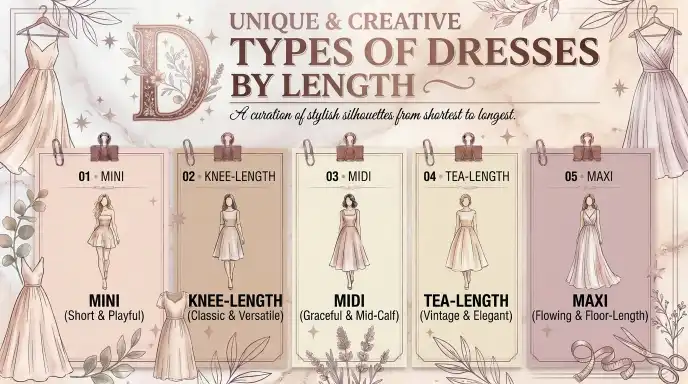
Dress length is one of the easiest ways to identify a style. Although exact measurements vary by design and wearer, these names provide a useful guide.
Mini Dresses
A mini dress has a hemline above the knee. Depending on the design, it may look playful, casual, glamorous, or formal.
Popular examples include:
- Mini Bodycon Dress
- A-Line Mini Dress
- Long-Sleeve Mini Dress
- Denim Mini Dress
- Mini Party Dress
- Pleated Mini Dress
- Mini Shirt Dress
Mini dresses work well for parties, casual outings, and warm-weather events. However, the most suitable length depends on your comfort and the setting.
Knee-Length Dresses
A knee-length dress reaches approximately to the knee. It offers a versatile option for work, daytime gatherings, and semi-formal events.
Common variations include:
- Knee-Length A-Line Dress
- Knee-Length Sheath Dress
- Knee-Length Wrap Dress
- Knee-Length Floral Dress
- Knee-Length Cocktail Dress
For a professional outfit, a simple knee-length design is often a practical choice. Meanwhile, a colorful or embellished version can suit a celebration.
Midi Dresses
A midi dress usually falls between the knee and ankle. Its length creates a versatile look that can be styled for casual or formal occasions.
Popular midi styles include:
- Midi Slip Dress
- Midi Wrap Dress
- Pleated Midi Dress
- Midi Shirt Dress
- Midi Bodycon Dress
- Floral Midi Dress
- Satin Midi Dress
Midi dresses pair well with flats, sandals, boots, or heels. Therefore, they can transition easily between different settings.
Maxi Dresses
A maxi dress is a long dress that generally reaches the ankles or floor. Many designs use flowing fabrics, although fitted maxi dresses are also common.
Popular options include:
- Floral Maxi Dress
- Bohemian Maxi Dress
- Maxi Slip Dress
- Maxi Wrap Dress
- Long-Sleeve Maxi Dress
- Tiered Maxi Dress
- Formal Maxi Dress
- Beach Maxi Dress
Maxi dresses are popular for holidays, outdoor gatherings, dinners, and formal occasions. For warm weather, lightweight fabrics can make a long dress feel more comfortable.
High-Low Dresses
A high-low dress has a shorter hemline at the front and a longer hemline at the back. This uneven shape adds movement and makes the design stand out.
High-low dresses appear in partywear, summer outfits, and occasion dresses. In addition, they can combine the appearance of a shorter dress with the drama of a longer skirt.
Types of Dresses for Casual Wear
Casual dresses are designed for comfort and everyday use. They often feature easy-care fabrics, relaxed shapes, and practical details.
T-Shirt Dress
A T-shirt dress resembles an extended T-shirt. It often has a simple neckline, short sleeves, and a loose or slightly fitted shape.
Wear it with sneakers for an everyday outfit. Alternatively, add a belt and a lightweight jacket for a more styled look.
Shirt Dress
A shirt dress takes inspiration from a button-up shirt. It may include a collar, front buttons, cuffs, and a matching belt.
This style works for casual outings, travel, and some office environments. Depending on the fabric, it can look relaxed or polished.
Denim Dress
A denim dress is made from denim fabric and comes in many silhouettes. Common options include denim shirt dresses, pinafore dresses, fitted denim dresses, and denim minis.
For a casual look, combine a denim dress with sneakers or ankle boots. In warmer weather, a sleeveless denim design can be a useful wardrobe option.
Sundress
A sundress is a lightweight dress commonly worn in warm weather. It often features short sleeves, thin straps, or a sleeveless design.
Floral prints, cotton fabrics, and bright colors are common choices. As a result, sundresses are popular for picnics, holidays, outdoor lunches, and summer outings.
Smock Dress
A smock dress usually has a loose shape with gathered or relaxed fabric. It provides room for movement and often creates a soft, casual appearance.
Smock dresses may have puff sleeves, short sleeves, or long sleeves. They are particularly useful for everyday outfits when comfort is a priority.
Pinafore Dress
A pinafore dress is a sleeveless dress designed to be worn over another garment, such as a shirt, blouse, or fitted top. It may have shoulder straps and a simple skirt.
For example, a denim pinafore can create a casual outfit with a T-shirt. Meanwhile, a tailored pinafore may look more structured.
Types of Dresses for Parties and Evening Events
Party dresses often feature distinctive fabrics, fitted silhouettes, decorative details, or dramatic shapes. The right option depends on the event’s dress code and your personal style.
Cocktail Dress
A cocktail dress is designed for semi-formal social occasions. It often has a knee-length or midi hemline, although modern styles vary.
Common choices include fitted dresses, elegant A-line designs, and satin cocktail dresses. For a polished finish, add suitable shoes and a small evening bag.
Sequin Dress
A sequin dress features small decorative pieces that reflect light. These details can create a sparkling effect for celebrations and evening events.
Sequin dresses come in mini, midi, and maxi lengths. Because the fabric is already eye-catching, simple accessories can help keep the outfit balanced.
Slip Dress
A slip dress is typically lightweight and has a simple, streamlined shape. Many versions use satin or similar smooth fabrics and feature thin shoulder straps.
Wear a slip dress on its own for an evening look. Alternatively, layer it over a T-shirt or under a jacket for a different style.
Off-the-Shoulder Dress
An off-the-shoulder dress sits below the shoulders, leaving the shoulder area exposed. It may have a fitted bodice, flowing skirt, or bodycon shape.
This neckline appears in party dresses, summer clothing, and formal designs. However, the fit around the upper body is important for comfortable movement.
One-Shoulder Dress
A one-shoulder dress features an asymmetrical neckline that leaves one shoulder exposed. The design can look modern and elegant without requiring many extra details.
It is popular in cocktail dresses, evening gowns, and eventwear. For a coordinated appearance, consider accessories that complement rather than compete with the neckline.
Cut-Out Dress
A cut-out dress includes openings in selected areas of the fabric, such as the waist, back, or sides. These details may be small and subtle or more dramatic.
Cut-out dresses are available in casual and party styles. Choose a design that feels secure and comfortable for the occasion.
Types of Formal and Evening Gowns
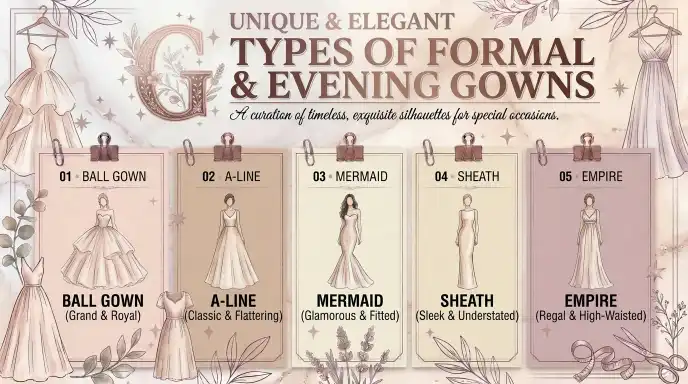
Formal dresses are designed for occasions that call for a more dressed-up appearance. They may feature luxurious fabrics, decorative finishes, long skirts, or structured bodices.
Ball Gown
A ball gown has a fitted bodice and a very full skirt. It is often associated with formal balls, gala events, and traditional eveningwear.
The skirt may use layers of tulle, satin, or other structured fabrics. As a result, ball gowns usually create a dramatic silhouette.
Mermaid Dress
A mermaid dress fits closely through the bodice and hips before flaring out near the knees or lower legs. This shape creates a distinctive, dramatic outline.
Mermaid gowns are popular for formal events and weddings. However, the fitted shape may restrict movement more than a looser dress.
Trumpet Dress
A trumpet dress fits through the upper body and hips before flaring out around the mid-thigh area. Its flare generally begins higher than that of a traditional mermaid gown.
This style can create a structured and elegant appearance. It is common in bridal fashion and formal eveningwear.
Empire Gown
An empire gown has a raised waistline below the bust and a skirt that falls from that point. It may be made from flowing fabric or more structured material.
This style is often used for formal events, bridesmaid dresses, and romantic occasionwear. Moreover, it can look graceful with simple jewelry.
Column Gown
A column gown has a long, relatively straight silhouette that follows the body’s vertical line. Unlike a ball gown, it does not have a very full skirt.
Column gowns often suit formal dinners, evening receptions, and black-tie events. Their clean shape also works well with minimal detailing.
Sheath Gown
A sheath gown follows the body’s outline and usually has a narrow silhouette. It may be knee-length, midi, or floor-length depending on the design.
This style is suitable for formal dinners, ceremonies, and elegant evening occasions. For added detail, designers may use lace, beading, or textured fabric.
Types of Dresses for Weddings
Wedding-related dress styles vary depending on the role, ceremony, location, and dress code. The following names cover common bridal and wedding-guest options.
- Wedding Gown: A dress worn by a bride during a wedding ceremony.
- A-Line Wedding Dress: A bridal gown with a fitted upper section and gradually widening skirt.
- Ball Gown Wedding Dress: A bridal style with a fitted bodice and full skirt.
- Mermaid Wedding Dress: A fitted gown that flares near the knees or lower legs.
- Tea-Length Wedding Dress: A dress with a hemline that typically falls between the knee and ankle.
- Bohemian Wedding Dress: A style often featuring flowing fabric, lace, embroidery, or relaxed details.
- Lace Wedding Dress: A wedding dress that uses lace as a major decorative feature.
- Off-the-Shoulder Wedding Dress: A bridal design with a neckline that sits below the shoulders.
- Bridesmaid Dress: A dress selected for members of the wedding party.
- Wedding Guest Dress: An outfit chosen for attending a wedding as a guest.
When selecting a wedding outfit, consider the invitation, venue, weather, and dress code. In addition, avoid assuming that one style is appropriate for every ceremony.
Types of Dresses by Sleeve Style
Sleeves can change the look of a dress even when the main silhouette stays the same. They also influence coverage, comfort, and the overall mood of an outfit.
| Sleeve Style | Main Feature | Common Look |
| Sleeveless | No sleeves covering the arms | Simple and versatile |
| Cap Sleeve | Very short sleeve covering the top of the shoulder | Delicate and classic |
| Short Sleeve | Sleeve ending above or around the elbow | Casual or everyday |
| Puff Sleeve | Rounded, gathered sleeve | Romantic or vintage-inspired |
| Bell Sleeve | Sleeve flares toward the wrist | Bohemian or dramatic |
| Bishop Sleeve | Full sleeve gathered near the wrist | Soft and elegant |
| Long Sleeve | Sleeve extending to the wrist | Classic and versatile |
| Flutter Sleeve | Loose, flowing sleeve | Light and feminine |
| Raglan Sleeve | Sleeve seam extends diagonally toward the neckline | Sporty or casual |
| Cold-Shoulder Sleeve | Sleeve with an opening at the shoulder | Modern and decorative |
For example, a puff-sleeve mini dress can feel romantic, while a long-sleeve sheath dress may look more formal. Therefore, sleeve style is a useful detail to consider when shopping.
Types of Dresses by Neckline
The neckline describes the shape of a dress around the neck and upper chest. It can influence the overall design and how accessories look with the outfit.
- V-Neck Dress: Features a neckline that forms a V shape.
- Scoop-Neck Dress: Has a rounded, curved neckline.
- Square-Neck Dress: Features a neckline with a straight horizontal edge and defined corners.
- Sweetheart-Neck Dress: Forms a curved shape resembling the top of a heart.
- Halter-Neck Dress: Uses straps or fabric that wrap around or fasten behind the neck.
- High-Neck Dress: Has a neckline that sits higher on the neck.
- Boat-Neck Dress: Features a wide neckline that runs across the collarbone area.
- Cowl-Neck Dress: Uses draped fabric around the neckline.
- Strapless Dress: Has no shoulder straps.
- Asymmetrical-Neck Dress: Features an uneven neckline, such as a one-shoulder design.
A V-neck dress may create a more open neckline, while a high-neck style offers greater coverage. Ultimately, the best choice depends on your comfort, outfit preferences, and the event.
Types of Dresses by Fabric

Fabric affects how a dress hangs, moves, and feels. Therefore, understanding common fabric names can help you identify styles when shopping online or in stores.
| Fabric | Typical Appearance | Common Dress Types |
| Cotton | Soft and breathable | Sundresses, shirt dresses |
| Chiffon | Lightweight and flowing | Evening dresses, formal gowns |
| Satin | Smooth with a lustrous surface | Slip dresses, party dresses |
| Linen | Light and naturally textured | Summer dresses, casual dresses |
| Velvet | Soft surface with a rich appearance | Evening dresses, winter partywear |
| Lace | Openwork decorative pattern | Wedding dresses, formal dresses |
| Denim | Sturdy woven cotton fabric | Denim dresses, pinafores |
| Tulle | Fine net-like fabric | Ball gowns, party dresses |
| Jersey | Stretchy knitted fabric | Casual dresses, bodycon dresses |
| Organza | Lightweight and crisp | Formal gowns, occasion dresses |
Keep in mind that fabric alone does not determine a dress style. For instance, a satin dress may have a slip silhouette, a wrap design, or a fitted bodycon shape.
How to Choose the Right Type of Dress
The right dress depends on where you plan to wear it, how you want it to feel, and the look you prefer. Use these factors to narrow your choices.
Consider the Occasion
First, think about the event. A sundress may suit a daytime outing, while a cocktail dress is often appropriate for semi-formal parties.
For weddings or formal dinners, review the dress code before choosing a gown. This simple step helps you avoid an outfit that feels too casual or too formal.
Choose a Comfortable Fit
A dress should allow you to sit, walk, and move comfortably. For example, a shift dress offers a looser shape, whereas a bodycon dress fits more closely.
Try different cuts instead of relying only on the dress name. In this way, you can find a style that feels right for your preferences.
Think About the Weather
Lightweight cotton and linen dresses are common choices for warm days. Conversely, heavier fabrics and long sleeves may be more suitable for cooler weather.
Layering also makes a difference. A shirt dress or slip dress can work across seasons when paired with suitable outerwear.
Select a Length You Like
Mini, midi, and maxi dresses offer different looks and levels of coverage. Therefore, consider your comfort, the event, and how you plan to style the dress.
For example, a midi dress can work for both casual and semi-formal settings. Meanwhile, a maxi dress may suit a beach holiday or an evening gathering.
Match the Details
Finally, consider the neckline, sleeves, color, fabric, and accessories. A simple dress can look more formal with heels and jewelry, while sneakers and a denim jacket can make it feel more casual.
The goal is to choose a dress that fits the occasion and reflects your personal style.
Common Mistakes When Identifying Dress Styles
Dress names can overlap, so it is easy to confuse one style with another. However, a few simple distinctions can make shopping easier.
- Confusing length with silhouette: A maxi dress describes length, while an A-line dress describes shape.
- Mixing up mermaid and trumpet gowns: Both flare near the lower body, but the flare begins at different points.
- Assuming fabric defines the whole dress: Satin, cotton, and lace can appear in several silhouettes.
- Ignoring the neckline: Two dresses with the same silhouette may look very different because of their necklines.
- Relying on a product title alone: Retailers sometimes use style names differently, so review the pictures and measurements.
- Choosing a dress only because it is trendy: Comfort, fit, and occasion matter just as much as current fashion.
Once you understand these differences, you can describe the dress you want more accurately and compare similar designs with greater confidence.
Frequently Asked Questions
Q1. What are the most common types of dresses?
Common dress types include A-line, maxi, midi, mini, bodycon, wrap, shift, shirt, slip, and fit-and-flare dresses. Each style has a different silhouette or length, so the best option depends on your preferences and the occasion.
Q2. What are the names of long dresses?
Popular long dress styles include maxi dresses, ball gowns, mermaid gowns, trumpet gowns, column gowns, and empire-waist gowns. However, not every long dress has the same shape; some are fitted, while others feature flowing or full skirts.
Q3. What is the difference between a maxi and a midi dress?
A maxi dress generally reaches the ankles or floor, whereas a midi dress falls between the knee and ankle. Both styles come in casual, formal, fitted, and flowing designs.
Q4. What is an A-line dress?
An A-line dress has a fitted upper section and a skirt that gradually widens toward the hem. Its shape resembles the letter A, and the style appears in casual clothing, office dresses, and formal outfits.
Q5. What is the difference between a mermaid dress and a trumpet dress?
A mermaid dress usually flares near the knees or lower legs. By comparison, a trumpet dress begins flaring higher, often around the mid-thigh area. Both styles are common in formal and bridal fashion.
Q6. Which dress styles are suitable for casual wear?
Casual options include T-shirt dresses, shirt dresses, sundresses, denim dresses, smock dresses, and pinafore dresses. Choose a fabric and fit that feel comfortable for your daily activities and local weather.
Q7. What are the different types of party dresses?
Popular party dress styles include cocktail dresses, sequin dresses, slip dresses, bodycon dresses, one-shoulder dresses, and cut-out dresses. The right choice depends on the event, venue, and dress code.
Q8. What are the different types of dress necklines?
Common necklines include V-neck, scoop-neck, square-neck, sweetheart, halter, high-neck, boat-neck, cowl-neck, and strapless designs. Each creates a different appearance around the neck and upper chest.
Conclusion:
Learning the names of different dress styles makes it easier to shop, plan outfits, and describe the look you want. From everyday T-shirt dresses and sundresses to elegant cocktail dresses and formal gowns, each style offers different features.
Start by identifying the occasion, preferred length, and overall silhouette. Then consider the neckline, sleeves, and fabric to narrow your options. With these details in mind, you can choose a dress that feels comfortable and suits your personal style.

I’m Mia Carter, a language enthusiast and writer passionate about making grammar, words, and everyday communication simple and easy to understand. I enjoy sharing clear, practical insights that help readers communicate with confidence.